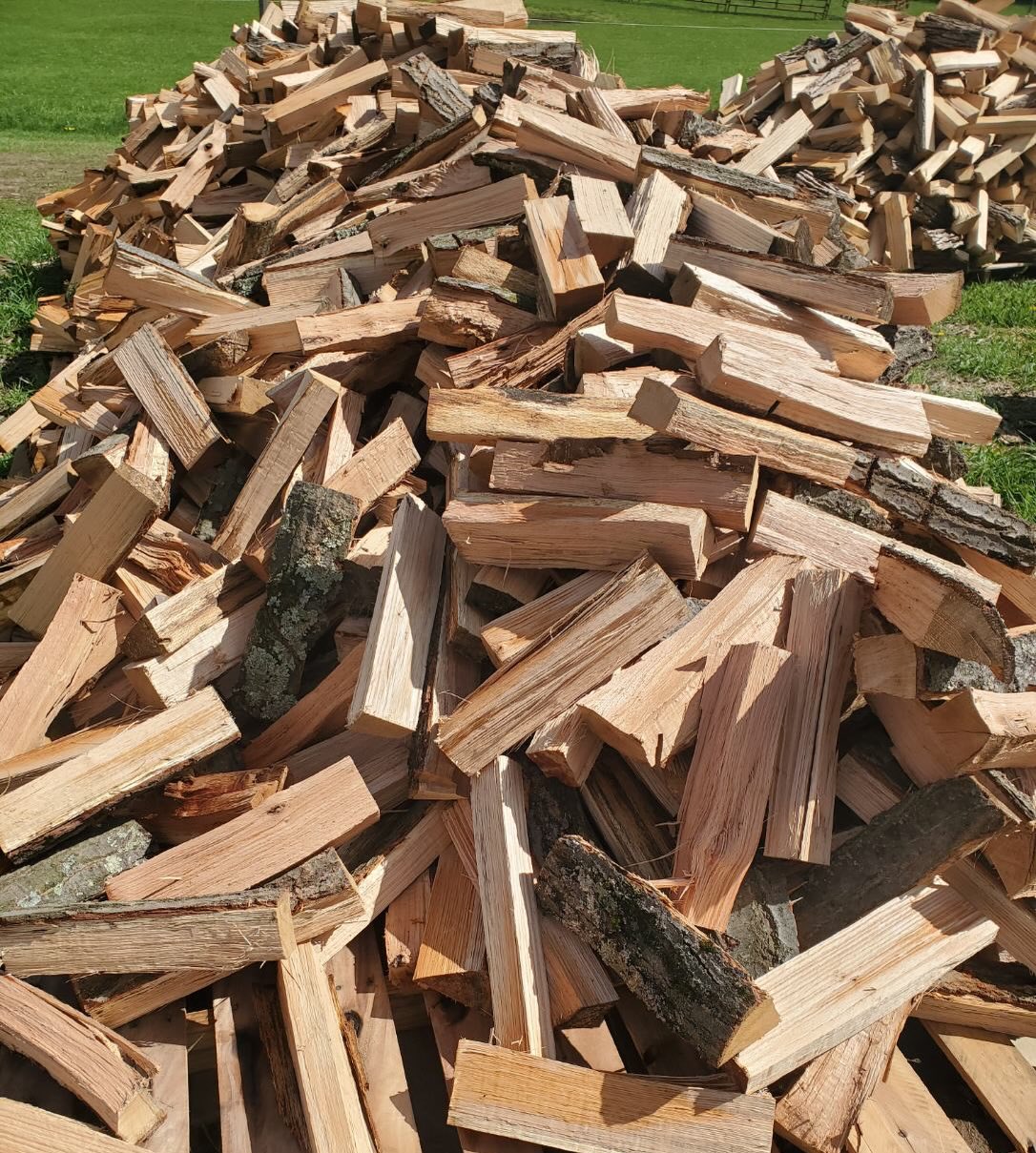
Fast-lighting softwood logs for stoves, campfires and quick heat.
Softwood firewood lights quickly and burns hot, making it a practical choice for kindling, campfires, and stoves that are used intermittently. Supplied crated or palletized, in the same logistics formats as our hardwood range.

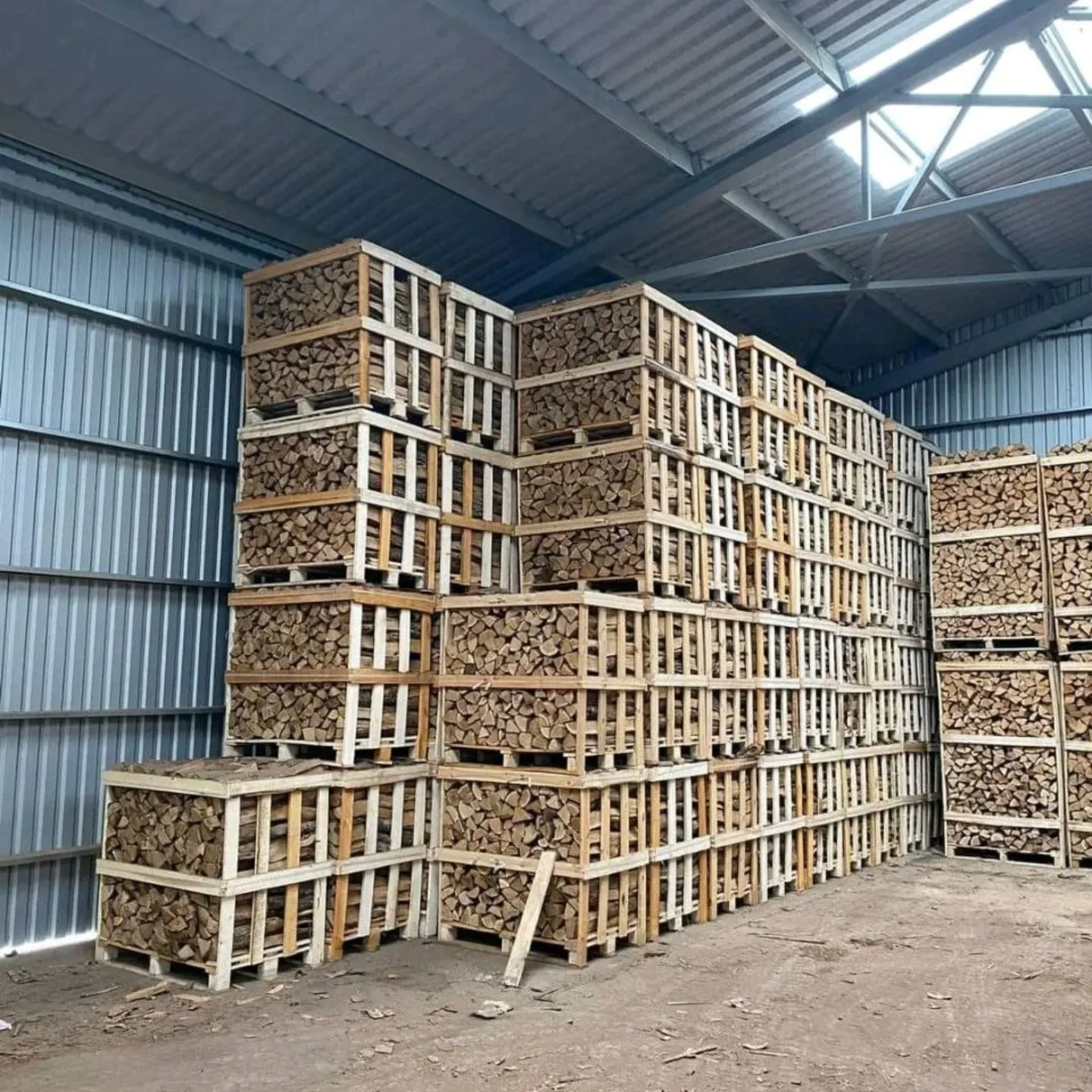
Packaging options are subject to product availability and customer requirements.
Firewood is raw or split wood burned directly, without the processing that pellets or briquettes go through. Its performance depends heavily on moisture content: freshly cut ('green') wood can be 40–60% water by weight, and burning it wastes energy boiling off that water, produces more smoke and creosote, and generates less usable heat. Seasoning or kiln-drying reduces moisture to a level where the wood ignites easily and burns cleanly.
KASUWOOD OÜ supplies firewood in the same logistics formats as our pellet and briquette lines — crated, palletized or loose by the truckload — so distributors and retailers can consolidate firewood into the same order and delivery schedule as other biomass fuel, rather than sourcing it separately.
Moisture content is the single most important figure for firewood — most modern stoves and building regulations across Europe expect firewood at or below 20% moisture. Log length matters too: it needs to fit your stove or fireplace, with 25 cm, 30 cm and 33 cm being the most common lengths ordered across the EU. Wood type (hardwood vs softwood) affects burn time and heat output more than smoke or cleanliness once moisture is properly controlled.
Firewood retailers and merchants — garden centres, fuel yards, hardware stores — buy crated or bagged firewood for direct resale to households, and prioritize consistent moisture content and tidy, sellable packaging over the lowest possible price. Distributors supplying households directly, including seasonal delivery services, need reliable volume through the autumn and winter ordering peak and value a supplier who can commit to a delivery schedule during the busiest months of the year. Hospitality venues — hotels, restaurants with wood-fired ovens or open fireplaces, campsites — typically buy smaller, more frequent orders and care most about consistent burn quality since firewood performance is visible to their own guests. Property managers and estate services sometimes buy firewood in bulk for tenant amenities or communal fireplaces, usually as a recurring seasonal order rather than a one-off purchase.
Kiln-dried vs. air-dried (seasoned) vs. green firewood. The distinction that matters most is moisture content, not the wood species. Green firewood, cut within the last few months, burns poorly and inefficiently and is generally unsuitable for direct commercial resale. Air-dried (seasoned) firewood has been left to dry naturally for six months to two years and reaches a workable moisture level, but drying time and final moisture vary with weather and storage conditions, making quality less predictable batch to batch. Kiln-dried firewood is dried in a controlled, heated chamber over days rather than months, consistently reaching low moisture levels regardless of the season it was processed in — which is why most commercial resellers now prefer it, particularly for winter deliveries when naturally seasoned stock may not be fully ready.
How to choose between hardwood and softwood firewood. Hardwood — oak, birch, beech and similar dense species — burns longer and produces more heat per log, making it the preferred choice where customers want fewer reloads and maximum heat output, such as overnight burning. Softwood ignites faster and is easier to get a fire started with, but burns faster and produces less heat per log, which suits kindling, campfires, and situations where quick heat matters more than burn duration. Many distributors stock both: hardwood as the primary product and softwood as a lower-cost complementary line or for kindling bundles. Log length should match the largest common appliance in your customer base — ordering slightly shorter than the maximum stated in typical stove manuals avoids complaints about logs not fitting.
Firewood is a renewable fuel when it comes from forestry operations that replant or naturally regenerate, and it's the lowest-processing biomass fuel option — no compression, no binding, no drying beyond seasoning or kiln-drying. Kiln-drying does use energy in the drying process itself, which is worth noting compared to naturally air-dried wood, though the energy input is generally small relative to the heat value delivered by the finished product. As with any biomass fuel, sustainability depends most on how the source forest is managed.
Aim for 20% or below, sometimes written as 'kiln-dried' or 'ready to burn'. Wood above this level will be harder to light, smokier, and less efficient — and in several EU countries, selling wet firewood above a legal moisture threshold is now restricted.
Kiln-dried wood is dried in a controlled, heated chamber over a matter of days, reaching low, consistent moisture levels quickly and predictably. Air-dried (seasoned) wood is left to dry naturally over months, which works but is slower and more weather-dependent. Kiln-drying is generally preferred for commercial resale because the moisture content is more consistent from batch to batch.
Check your stove or fireplace's maximum log length and order slightly shorter to allow easy loading. 25 cm and 30 cm are common for household stoves; 33 cm is more typical for open fireplaces and larger appliances.
Keep it off the ground, covered on top but with airflow at the sides, and away from damp walls. Crated and palletized deliveries make this easier to manage in a retail or distribution yard than loose bulk piles.
Several EU countries have introduced or are introducing moisture limits (commonly around 20-25%) for firewood sold commercially, as part of air-quality regulations. Requirements vary by country, so check your local regulation — kiln-dried stock at or below 20% moisture is the safest default for cross-border resale.
Hardwood (oak, birch, beech and similar) is denser, burns longer, and gives more heat per log. Softwood ignites faster and is easier to start a fire with, but burns quicker and gives less heat per log. Many customers use softwood for kindling and hardwood for the main burn.
That depends entirely on the size of the delivery and how it's used — a full crate for a retailer moves through inventory much faster than a single household's seasonal supply. Tell us your typical order pattern and we can help you plan restocking intervals.
Yes — many of our distributor customers combine firewood with wood pellets, briquettes or charcoal in the same truckload to consolidate delivery costs and scheduling. Mention this when requesting a quote and we'll coordinate the combined order.
Once you send your required quantity and delivery destination, our sales desk confirms availability and issues a wholesale quotation. Typical EU truck delivery runs approximately 3–5 business days after payment confirmation and loading — see our full delivery process for details.
Five kiln-dried hardwood species, supplied to order from one wholesale account.
View ProductSend your required quantity and delivery destination and our sales desk will prepare a wholesale quotation.