Rectangular compressed-wood briquettes for long, steady burning.
RUF-format briquettes are rectangular, solid-pressed blocks made from compressed wood residue, without a central hole. Their density gives a long, steady burn time, making them a popular choice for stoves and fireplaces that are loaded infrequently.
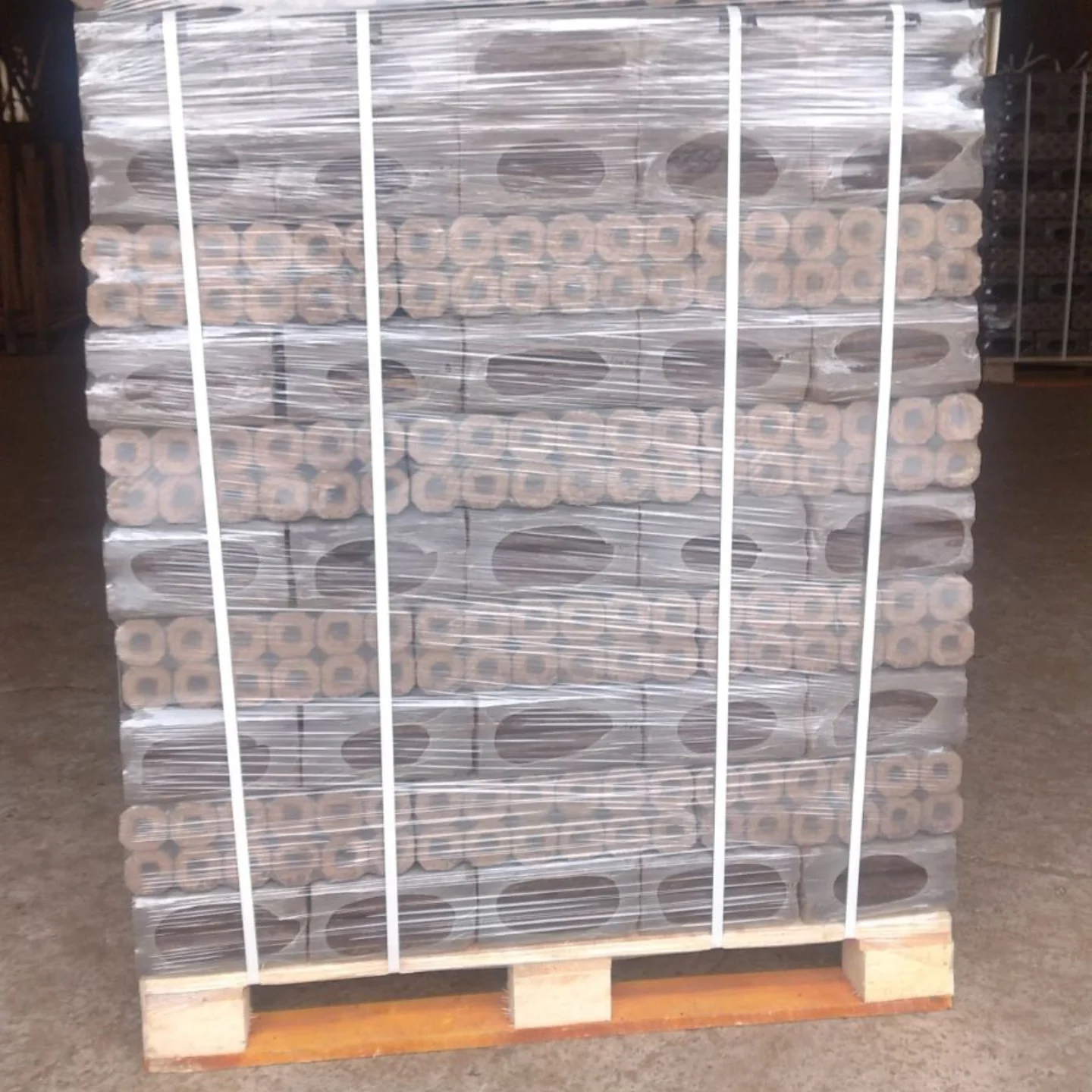
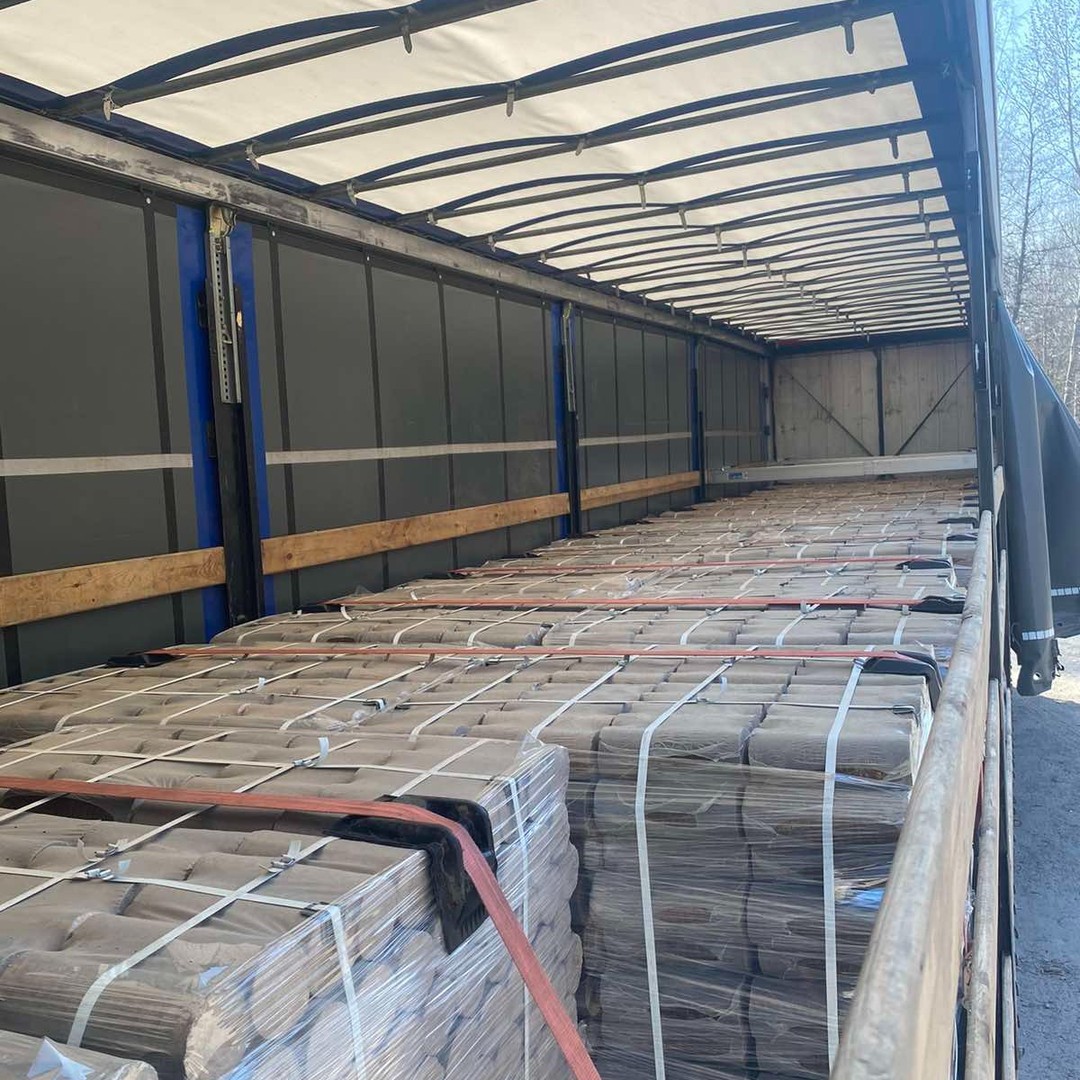
Packaging options are subject to product availability and customer requirements.
Wood briquettes are made by compressing dry wood residue — sawdust, shavings and small offcuts — under very high pressure, without added binders. The pressure alone generates enough heat to soften the wood's natural lignin, which then binds the briquette into a dense, uniform block as it cools. Because they're denser and drier than firewood, briquettes burn longer and more predictably, and their uniform shape makes them easy to stack, store and transport.
KASUWOOD OÜ supplies wood briquettes in the standard European formats — RUF (rectangular), Pini & Kay (hexagonal) and Nestro (round) — so distributors can offer their customers the format they're already used to, sourced through one wholesale account rather than several regional suppliers.
The main practical difference between briquette formats is shape and hole profile. RUF briquettes are solid rectangular blocks with no hole, giving very long burn times and easy stacking. Pini & Kay and Nestro briquettes have a hollow core (hexagonal or round respectively), which helps airflow during combustion and can make them easier to break down into smaller pieces for kindling. All three formats share low moisture (typically ≤10%) and low ash content as their main quality markers.
Residential stove and fireplace users, buying through retailers, choose briquettes over firewood mainly for the longer, more predictable burn time and cleaner handling — no bark, no splinters, no size variation. Long-burn heating applications such as overnight stove loading benefit from briquettes' density, since a smaller volume delivers more sustained heat than the equivalent volume of firewood. Retailers and distributors favour briquettes for their uniform, stackable shape, which makes shelf and warehouse space more efficient to use than irregular firewood logs. Commercial and industrial buyers sometimes choose briquettes specifically for their low ash and consistent moisture, which reduces maintenance intervals on automated or semi-automated heating equipment compared to variable-quality firewood.
RUF vs. Pini & Kay vs. Nestro — which briquette format to stock? RUF's solid rectangular blocks have no central hole, giving the longest, steadiest burn and the easiest stacking for pallet storage — a natural fit for stoves with a wide loading door and for buyers prioritizing maximum burn time per load. Pini & Kay's hexagonal profile with a hollow core is one of the most common formats across central Europe, breaks cleanly into smaller pieces for controlled loading, and is generally easy for end users to handle by hand. Nestro's round, hollow-core format is similarly easy to handle and is often preferred where automated or semi-automated feed systems are involved, since the uniform round profile feeds more predictably than irregular shapes. In practice, many distributors stock more than one format to match different customer bases and appliance types rather than picking a single winner.
How to choose a briquette format for your market. Ask what format your customer base is already familiar with — in many central and eastern European markets, Pini & Kay and Nestro are the established standard, and introducing RUF may require customer education. Check your typical end appliance: stoves with narrow loading doors handle round or hexagonal briquettes more easily, while wide-door stoves and larger fireplaces can take RUF's rectangular blocks without issue. If your buyers value the longest possible burn time per load — for example, overnight heating — RUF's solid, hole-free density is usually the strongest option. If ease of manual handling and breaking into smaller pieces matters more, the hollow-core formats have the edge.
Wood briquettes are made entirely from compressed wood residue — sawdust, shavings and offcuts that are a by-product of other timber processing — with no added binders, which means they turn a waste stream into a usable fuel rather than requiring additional timber to be harvested specifically for briquette production. As with other biomass fuels, their overall carbon profile depends on the source wood coming from responsibly managed forestry and processing operations.
They're different tools for different needs. Briquettes are denser, drier and more consistent in size, giving longer and more predictable burn times, which suits stoves that are loaded infrequently. Firewood is often cheaper per delivered volume and remains the traditional choice for open fires and campfires.
It largely comes down to what your customers already use and your stove or fireplace's loading opening. RUF's rectangular blocks suit stoves with a wide door; the hexagonal Pini & Kay and round Nestro formats are common across central and eastern Europe and are easy to hand-load.
Like pellets, briquettes need to stay dry — moisture exposure will cause them to swell and break apart. Shrink-wrapped packs and palletized storage, kept off the ground and under cover, are the standard approach.
Yes, both formats work in open fireplaces and closed stoves, though closed stoves generally get more efficient, longer-lasting heat from briquettes because combustion air is controlled.
A given weight of briquettes generally burns significantly longer than the same weight of firewood, because briquettes are denser and drier. The exact difference depends on the specific format and the appliance, but this is the main reason briquettes suit overnight or infrequent-reload heating.
Well-made briquettes typically produce less ash than firewood, since they're manufactured from clean, dry wood residue with a consistent, low ash content — whereas firewood ash content varies more with bark content and wood species.
Yes — many distributors order a mix of RUF, Pini & Kay and Nestro to serve different segments of their customer base from one delivery. Specify the split you need when requesting a quote.
Briquettes work in outdoor fire pits and some barbecue setups, though for grilling specifically, most customers prefer charcoal, which is designed and produced specifically for that use. Briquettes are primarily a heating fuel.
Once you send your required quantity and delivery destination, our sales desk confirms availability and issues a wholesale quotation. Typical EU truck delivery runs approximately 3–5 business days after payment confirmation and loading — see our full delivery process for details.
Hexagonal, hollow-core briquettes with a long, hot, low-ash burn.
View ProductRound, hollow-core briquettes for consistent, easy-handling heat.
View ProductSend your required quantity and delivery destination and our sales desk will prepare a wholesale quotation.